2026 Aeration Equipment Industry Trends: Intelligent Control, Ultra-Energy Efficiency, and Lifecycle Maintenance
As the vital "heart and lungs" of modern secondary biological wastewater treatment, the aeration system typically accounts for 50% to 70% of a wastewater treatment plant's total electrical power consumption. Driven by global decarbonization mandates, volatile energy costs, and increasingly stringent effluent discharge standards, the efficiency bottlenecks and high maintenance expenses of traditional coarse or static aeration setups have become unsustainable. According to recent water industry reports, the global aeration equipment market is rapidly shifting toward three defining pillars between 2025 and 2030: higher Standard Oxygen Transfer Efficiency (SOTE), digital-twin precision control, and liftable zero-downtime maintenance architectures.
For municipal wastewater plant operators, industrial EPC contractors, and design institute engineers, procurement decisions based purely on initial equipment price have been supplanted by Lifecycle Cost (LCC) analysis. The core engineering challenge today is clear: how to maximize fine-bubble aeration energy savings while ensuring 24/7 compliance of biological effluent quality.
This article reviews the four pivotal evolution trends shaping the 2026 aeration equipment landscape across material science, intelligent automation, structural engineering, and global environmental compliance.
1. Membrane Material Innovation and the Pursuit of Peak SOTE
The core performance of fine bubble diffusers (disc, tube, and plate) is directly determined by the micro-pore perforation precision, elasticity recovery, and anti-aging resistance of polymeric elastomer membranes.
1.1 High-Performance Modified EPDM and Specialty Silicone Membranes
- Anti-Oil & Low-Extraction Modified EPDM: Standard industrial EPDM is vulnerable to swelling, hardening, and pore deformation when exposed to wastewater containing solvents, animal fats, or mineral oils. The 2026 industry benchmark utilizes high-saturation EPDM raw rubber coupled with nano-hydrophobic cross-linking agents and specialized antioxidant formulations. This design dramatically extends flex fatigue life in harsh industrial wastewater, prolonging physical elasticity to 6–8 years.
- Specialty Silicone & Fluoropolymer Membranes: For high-temperature industrial wastewater (>50°C) and corrosive chemical streams, engineering-grade silicone membranes (VMQ) and PTFE-coated composites have achieved widespread adoption. Their chemical inertness eliminates plasticizer leaching, prevents pore scaling, and maintains low, stable aeration headloss over prolonged operating cycles.
1.2 Micro-Bubble Fluid Dynamics and SOTE Leaps
At a standard 6.0-meter submergence depth, modern fine bubble aeration systems optimize slit density and internal airflow distribution channels to maintain average bubble diameters tightly within the 1.0–2.0 mm ultra-fine range:
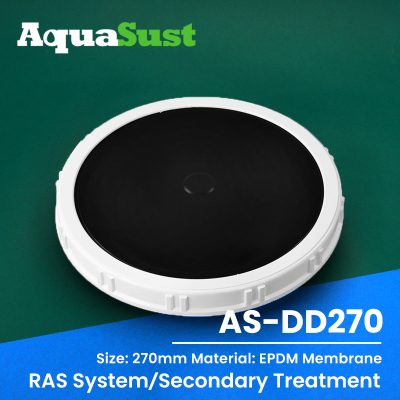
- Premium micro-porous disc diffusers (such as AquaSust AS-DD215, AS-DD270, and AS-DD350) and tube diffusers (such as AquaSust AS-TD63, AS-TD93, and AS-TD113) achieve SOTE ratings of 35% to 42%, compared to 24%–28% for conventional systems.
- Standard Aeration Efficiency (SAE) reaches 5.0–6.8 kg O₂/(kW·h), substantially reducing blower discharge pressure requirements and motor sizing.
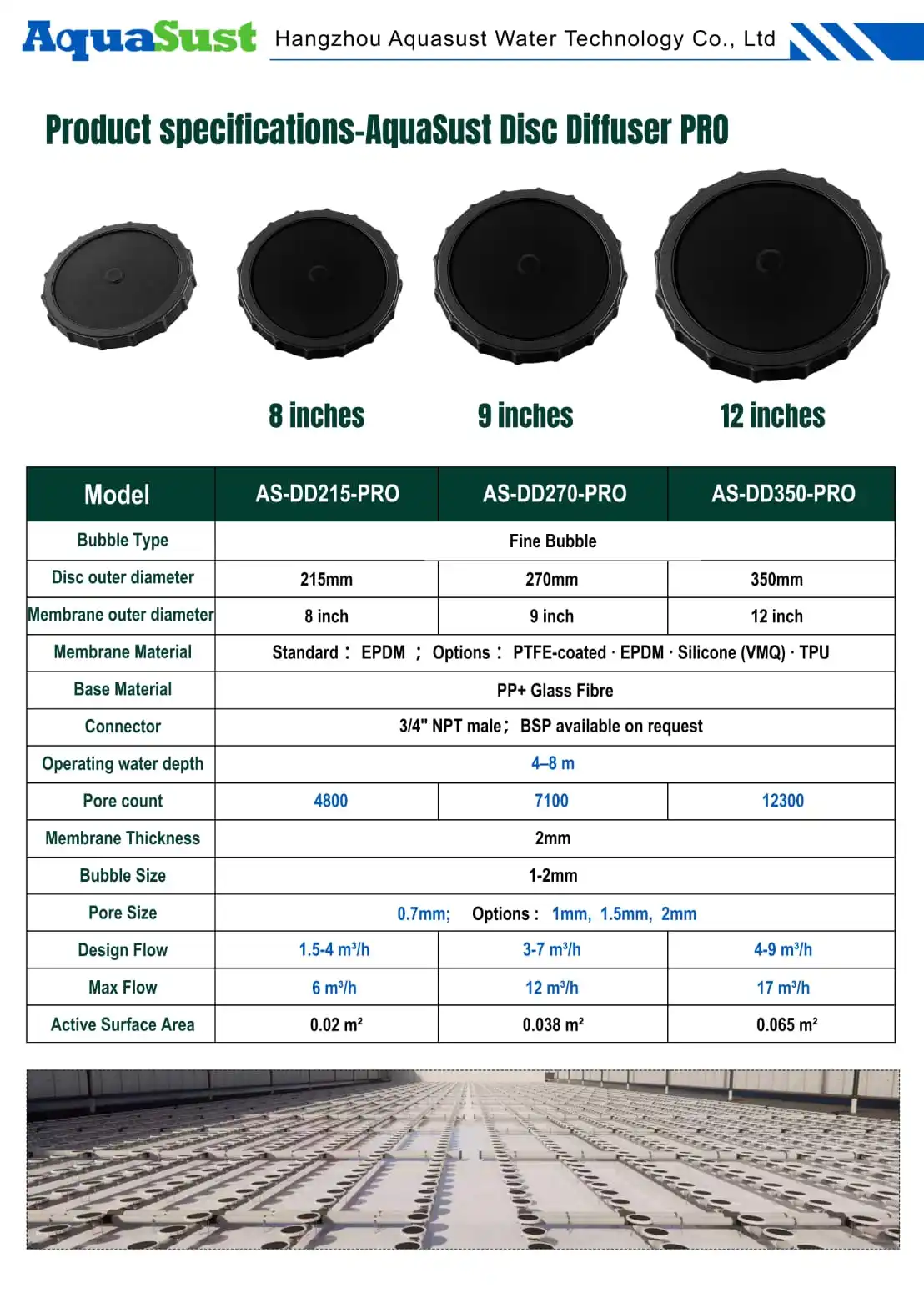
Figure 1: AquaSust High-SOTE Fine Bubble Disc Diffuser Range (AS-DD215, AS-DD270, AS-DD350)
2. AI and Digital-Twin Driven Closed-Loop Precision Aeration
Traditional static blower schedules frequently result in over-aeration during low-load periods (DO > 4.0 mg/L, which wastes massive electrical energy and shears biological sludge flocs) or acute dissolved oxygen deficits during peak influent surges.
2.1 Multi-Parameter Feedforward-Feedback Control Algorithms
Next-generation intelligent aeration systems integrate real-time sensor telemetry with adaptive airflow distribution models:
- Feedforward Sensing: High-frequency online ammonia-nitrogen sensors and influent flowmeters anticipate biological oxygen demand hours in advance.
- Feedback Fine-Tuning: Optical dissolved oxygen (DO) probes and real-time Oxygen Uptake Rate (OUR) monitoring allow PLC algorithms to modulate individual branch control valves and blower variable frequency drives (VFDs) dynamically.
- Dynamic Headloss Compensation: Automated diagnostics compare blower discharge pressure against hydrostatic head. When local membrane fouling is detected, the system triggers automated high-rate air pulsing to purge biofouling without manual intervention.
2.2 Quantified Energy and Carbon Savings
In verified municipal wastewater treatment installations (10,000+ m³/day), closed-loop precision aeration consistently achieves 15% to 25% reductions in total blower power consumption, while narrowing effluent ammonia variance by over 40%—providing a tangible path toward net-zero wastewater facilities.
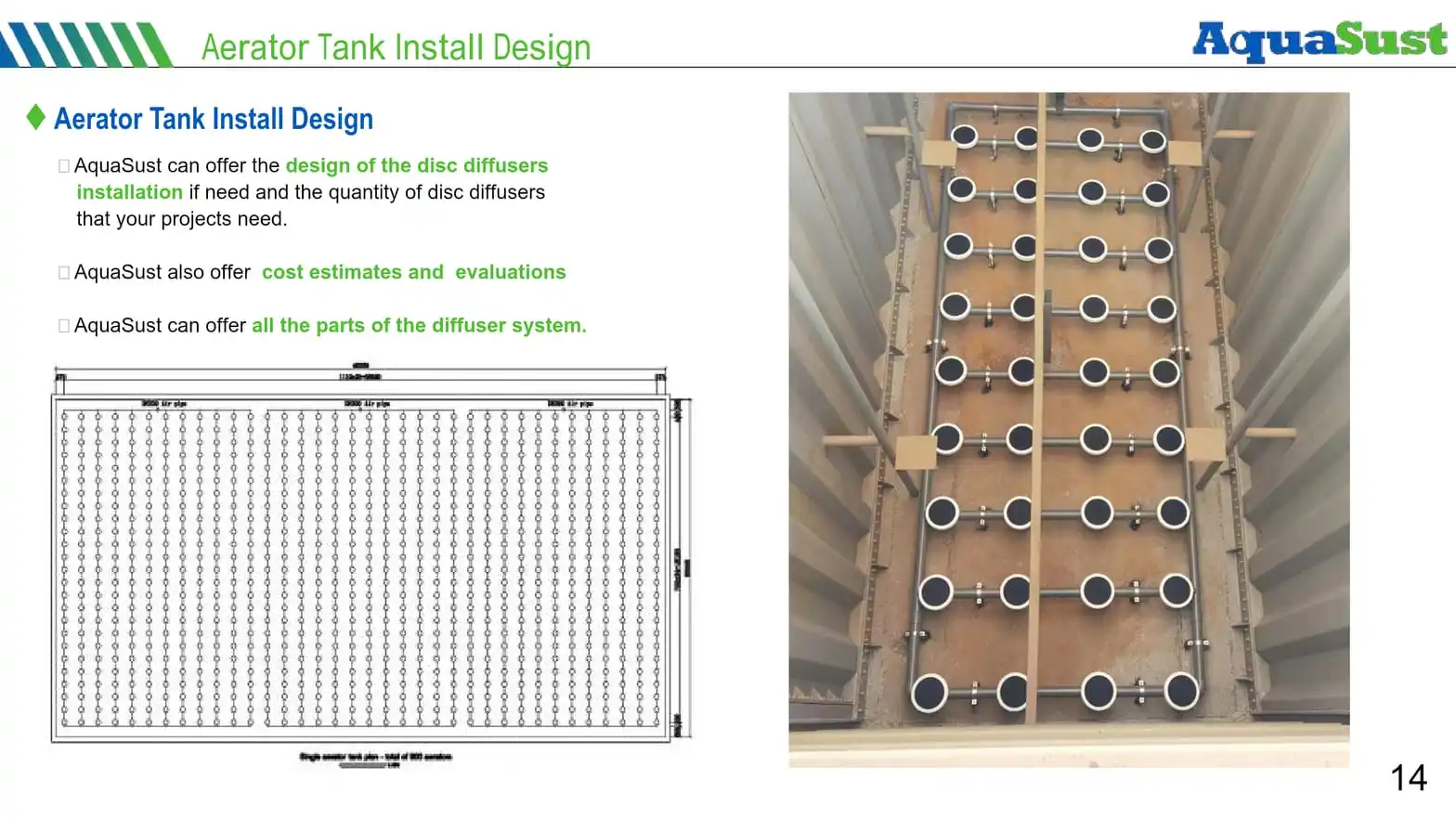
Figure 2: Aeration Basin Layout Engineering and Multi-Branch Air Distribution Grid
3. Modular Prefabrication and Zero-Downtime Liftable Aeration Grids
In facility expansion, upgrading, or maintenance, shutting down and draining biological tanks is prohibitively expensive. Draining thousands of cubic meters of mixed liquor causes weeks of production loss and requires lengthy biological re-seeding.
3.1 Stainless Steel (AISI 304/316L) Liftable Rail Systems
To eliminate drain-down bottlenecks, Liftable Aeration Grid Systems have transitioned from specialized retrofits to mainstream engineering specifications:
- In-Situ Surface Servicing: Each aeration grid unit is guided by stainless steel wall tracks. Maintenance personnel can hoist an entire grid assembly to the tank surface using a mobile crane or jib hoist, completely independent of biological tank operations.
- Self-Sealing Quick-Connect Couplings: Underwater flexible air hoses feature engineering-grade quick-connect flanges with integrated shut-off valves. Replacing an entire diffuser module takes 30 to 60 minutes, compared to 7–14 days for traditional draining and re-commissioning.
3.2 Anti-Buoyancy Hydrodynamic Structural Design
For deep tanks with high horizontal mixed-liquor velocities, 2026 liftable systems integrate hydrodynamic flow-aligned structural profiles and submerged ballast weights. This prevents flow-induced pipe vibration, resonance, and joint fatigue under turbulent aeration conditions.
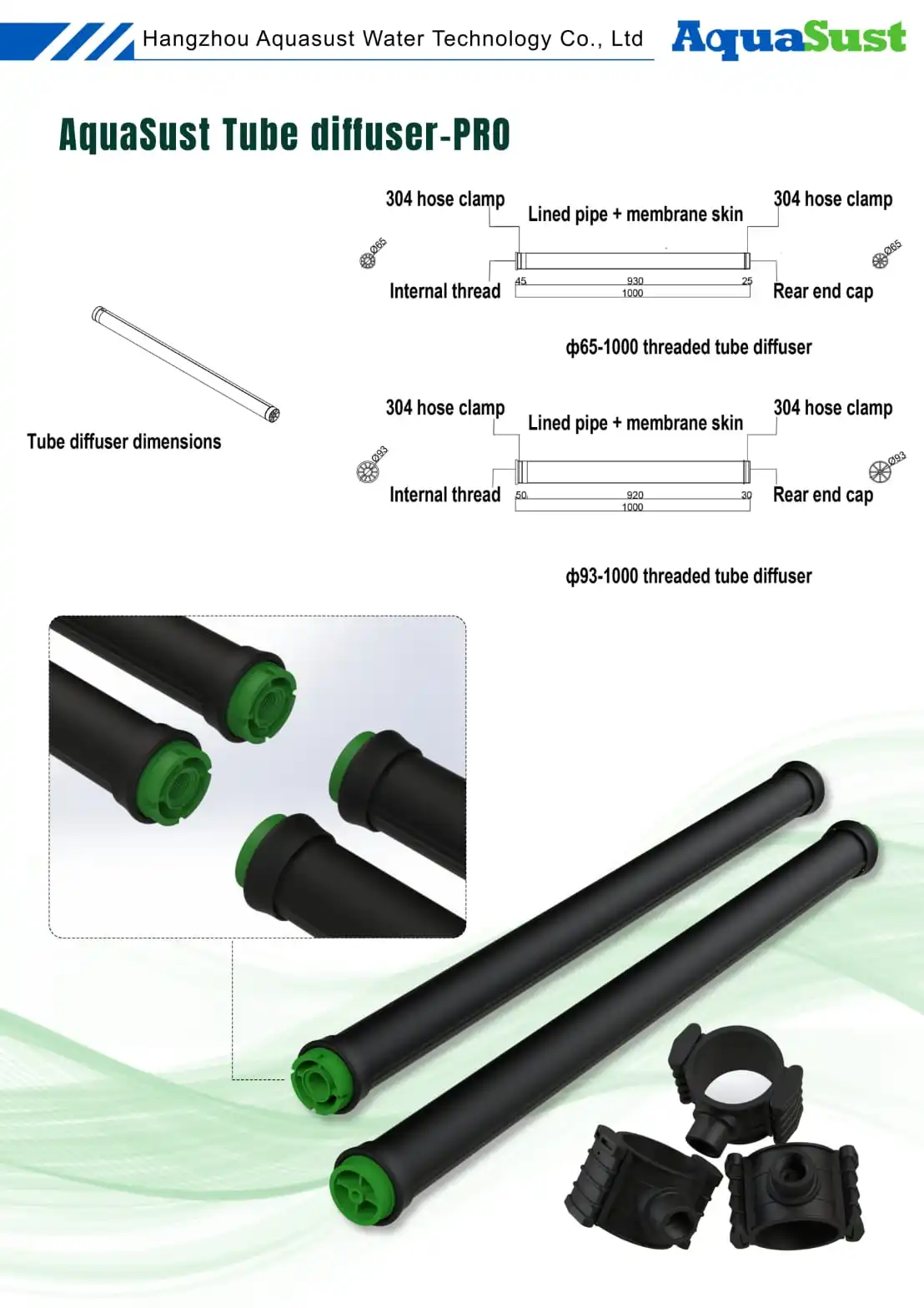
Figure 3: AquaSust Tube Diffuser Structural Cross-Section and Modular Joint Detail
4. Technical and Economic Comparison: Conventional vs. 2026 Intelligent Liftable Aeration
| Performance Dimension | Conventional Fixed Aeration System | 2026 Intelligent Liftable Aeration System | Engineering & Economic Value |
|---|---|---|---|
| Membrane Formulation & Durability | Standard industrial EPDM; max temp 70°C | Anti-oil modified EPDM / High-elasticity Silicone (120°C+) | 1.5–2x fatigue life; minimal headloss rise over time |
| Standard Oxygen Transfer Efficiency (SOTE @ 6m) | 24% – 28% | 34% – 42% (Ultra-fine bubble distribution) | Reduces blower airflow demand by 25%–35% |
| Control Precision & Automation | Manual fixed-speed or stepped blower control; DO swings ±1.5 mg/L | AI closed-loop feedforward-feedback; DO precision ±0.2 mg/L | Eliminates over-aeration; cuts blower power by 15%–25% |
| Maintenance & Replacement Procedure | Mandatory full tank drainage, sludge hauling, and weeks of shutdown | Surface crane lift-out; zero process disruption | Reduces downtime from 10+ days to under 2 hours |
| Initial Capital Expenditure (CAPEX) | Baseline (100%) | Moderate increase (approx. 125%–140%, including valves & guide rails) | Incremental cost recovered via power savings within 12–18 months |
| 10-Year Lifecycle Cost (LCC) | High (massive power consumption + repeated cleaning downtime) | Significantly lower (>30% overall OPEX reduction) | Maximizes plant asset efficiency and decarbonization ROI |
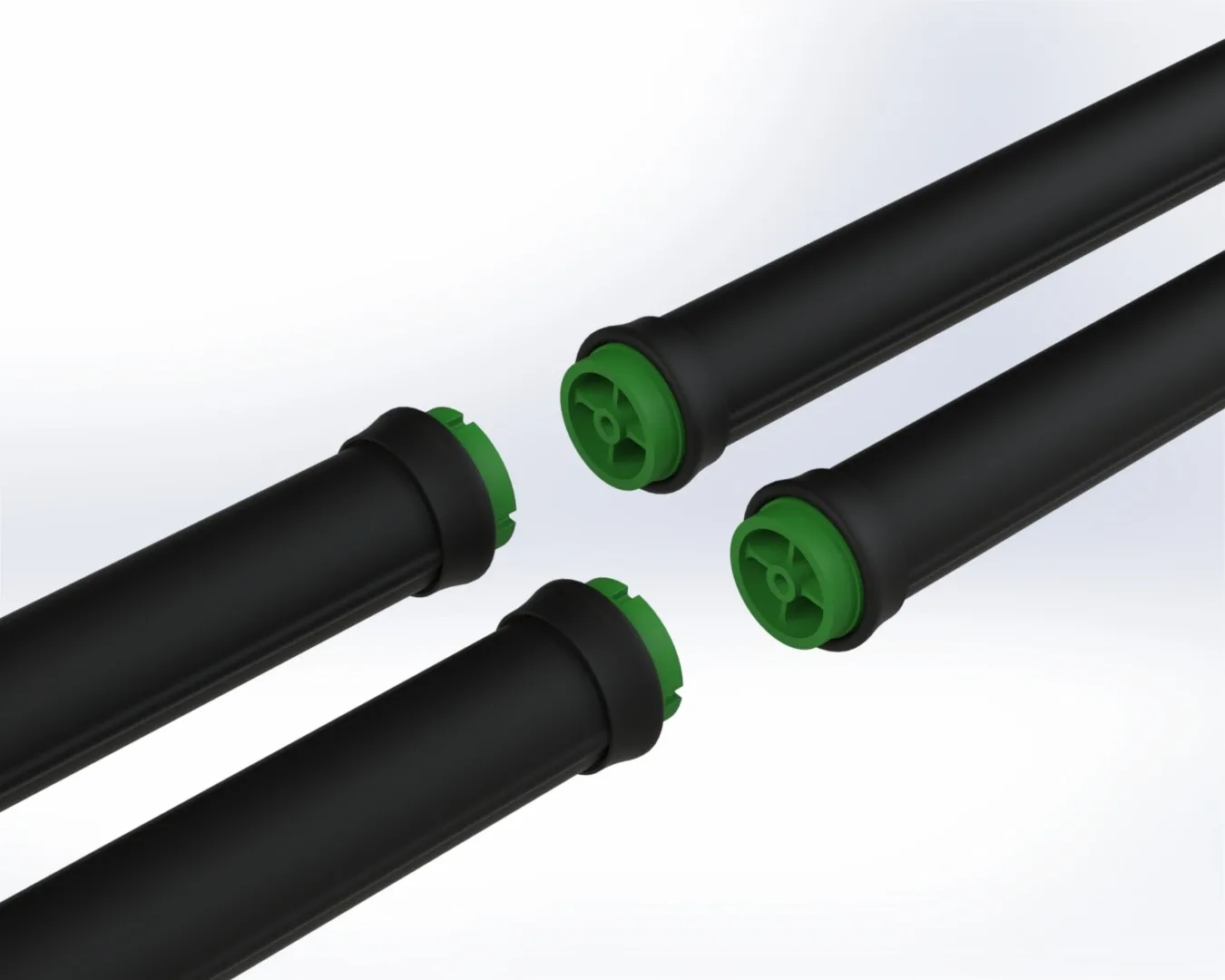
Figure 4: Wastewater Treatment Aeration Basin Grid Installation Field View
5. Regional Environmental Regulations and Water Quality Adaptation
Global standards and local environmental conditions require targeted engineering adaptations:
5.1 European Market (EU Energy Efficiency Directive & EN Standards)
- Carbon Footprint & EPD: European facilities strictly enforce Directive (EU) 2023/1791 and EN 12255-15 oxygenation testing standards, requiring detailed Environmental Product Declarations (EPD) and recyclable materials.
- Ultra-Low Headloss: European designs favor starting headloss below 2.5 kPa paired with high-efficiency magnetic bearing turbo blowers to minimize specific power consumption.
5.2 North American Market (EPA Guidelines & Utility Rebates)
- Utility Rebate Alignment: Municipal projects leverage EPA energy-efficiency grants and local utility rebates, necessitating SCADA-integrated demand response capabilities.
- Standard Industrial Interfaces: Equipment must conform to 460V/60Hz electrical standards and ANSI/ASME flange piping schedules with robust backflow-prevention check valves.
5.3 High-Temperature & High-Salinity Environments (Middle East & Tropical Regions)
- Extreme Climate Resistance: Ambient temperatures reaching 40°C–48°C combined with high-salinity industrial wastewater accelerate rubber thermal degradation.
- Metallurgical Grades: Projects specify AISI 316L or Duplex 2205 stainless steel for all submerged structural frameworks, paired with high-tear silicone membranes to resist saline crystallization and thermal stress.
Frequently Asked Questions (FAQ)
Q1: What are the maintenance requirements for online sensors in intelligent aeration systems?
High-precision closed-loop control relies on trustworthy sensor data. Optical DO sensors and ammonia probes in activated sludge can accumulate biofilm. Best practices include:
- Equipping sensors with automated compressed-air or ultrasonic self-cleaning nozzles;
- Performing manual calibration checks every 2 to 4 weeks;
- Incorporating sensor-drift fault detection in the PLC to fall back to safe model curves if a sensor fails.
Q2: Can existing fixed-grid aeration tanks be retrofitted with liftable aeration systems without civil alterations?
Yes. Modern liftable aeration systems are specifically engineered for drop-in retrofits:
- Guide rails and top support brackets anchor to existing basin walls and walkways using chemical anchors, requiring no structural demolition.
- The grid rests securely on self-supporting, anti-buoyancy pedestals at the tank floor without bottom anchor bolts.
- Existing main blower air headers are preserved and connected via quick-shutoff butterfly valves and reinforced flexible couplings.
Q3: What is the typical design life of modern fine-bubble aeration equipment?
Aeration systems comprise two lifecycle tiers:
- Structural Piping & Stainless Steel Supports: Fabricated from AISI 304/316L stainless steel and glass-fiber reinforced polypropylene (PP-GF), providing an expected operating life of 15 to 20+ years.
- Elastomeric Diffuser Membranes: High-grade modified EPDM membranes deliver 5 to 8 years of service in municipal wastewater, while specialty silicone membranes reach 6 to 10 years. Replacing only the membranes restores initial SOTE performance at a fraction of total replacement cost.
Conclusion
Entering 2026, wastewater aeration technology has evolved from simple mechanical equipment into an integrated discipline spanning advanced polymer science, computational fluid dynamics (CFD), and artificial intelligence. Ultra-high SOTE micro-porous membranes, adaptive closed-loop airflow controls, and modular liftable grids are redefining wastewater infrastructure efficiency and asset reliability.
As a dedicated global manufacturer of aeration equipment and wastewater solutions, AquaSust provides high-efficiency fine bubble disc diffusers (AS-DD series), tube diffusers (AS-TD series), plate diffusers, and complete custom liftable aeration systems. Our engineering team delivers comprehensive aeration layout design, airflow modeling, and equipment sizing to ensure your wastewater facility achieves optimal energy efficiency and long-term regulatory compliance.