Wastewater secondary treatment solution

Choose AquaSust Professional Wastewater Treatment Experts
Home / All / Aeration System / Plate Aeration Diffuser

Plate Aeration Diffuser

Aeration System · Plate Diffuser

Plate Aeration Diffuser

Fine Bubble Plate Aeration Diffuser Manufacturer & Supplier

  • AS-PD650
  • AS-PD650-Pro
  • AS-PD1100-Pro · Special Large-Format

AquaSust AS-PD series plate aeration diffusers are high-efficiency aeration components engineered for high-standard municipal and industrial wastewater treatment, including power plant wastewater and seawater desulfurization duty.

The AS-PD650 is the standard model for conventional aeration tanks and small-to-medium scale renovation projects. The AS-PD650-Pro places the same 650 mm platform on a PP + glass fiber base plate and frame. The AS-PD1100-Pro is a special large-format model with a 0.2 m² effective membrane area — wider coverage per unit, aimed at energy-saving renovation of large-scale sewage treatment plants.

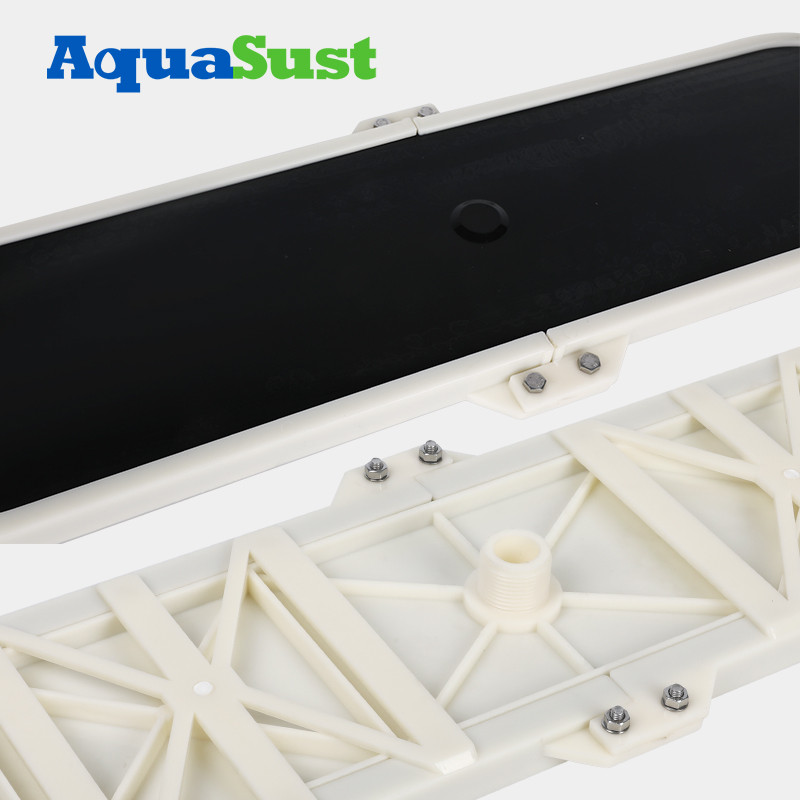
AS-PD650 plate aeration diffuser from the AquaSust AS-PD series, with fine bubble membrane, ribbed base plate and frame

AS-PD series plate diffusers — uniform membrane surface, uniform bubble release.

Nominal bubble diameter
0.8–2.0 mm
Fine pore / fine bubble
Design airflow
6 / 10 m³/h
AS-PD650 / AS-PD1100-Pro
Operating range
1–20 m³/h
Wide turndown per unit
Design coverage area
up to 5.0 m²
per diffuser, reference value

Two platforms, three models

Choose the Right Plate Diffuser for Your Project

The AS-PD series runs on two physical platforms — the 650 mm plate and the 1180 mm large-format plate. Each is available with the base plate and frame construction that fits the specification of your aeration tank and the local procurement standard.

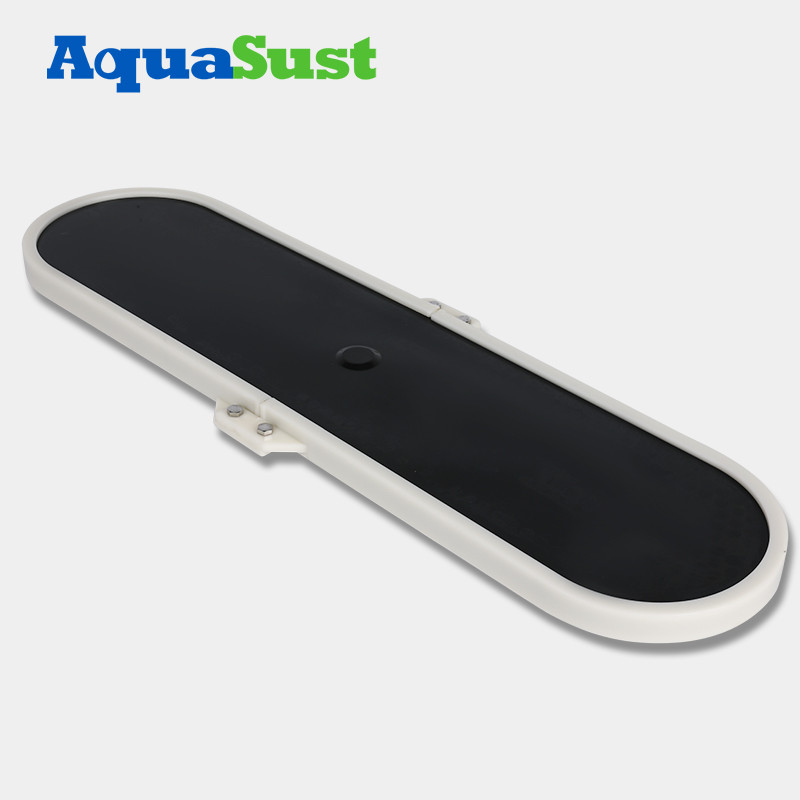
AS-PD650 plate aeration diffuser, front view, 680 x 220 mm, fine bubble EPDM membrane on ABS base plate and frame
Standard Model

AS-PD650

EPDM membrane · ABS base plate & frame

  • Overall dimensions 680 × 220 mm
  • Design airflow 6 m³/h, operating range 1–16 m³/h
  • Nominal bubble diameter 0.8–1.9 mm
  • Design coverage area per diffuser 0.5–2.5 m² (reference)
  • Pressure loss 2.0–4.3 kPa

Best for: conventional aeration tanks and small-to-medium scale renovation or retrofit projects.
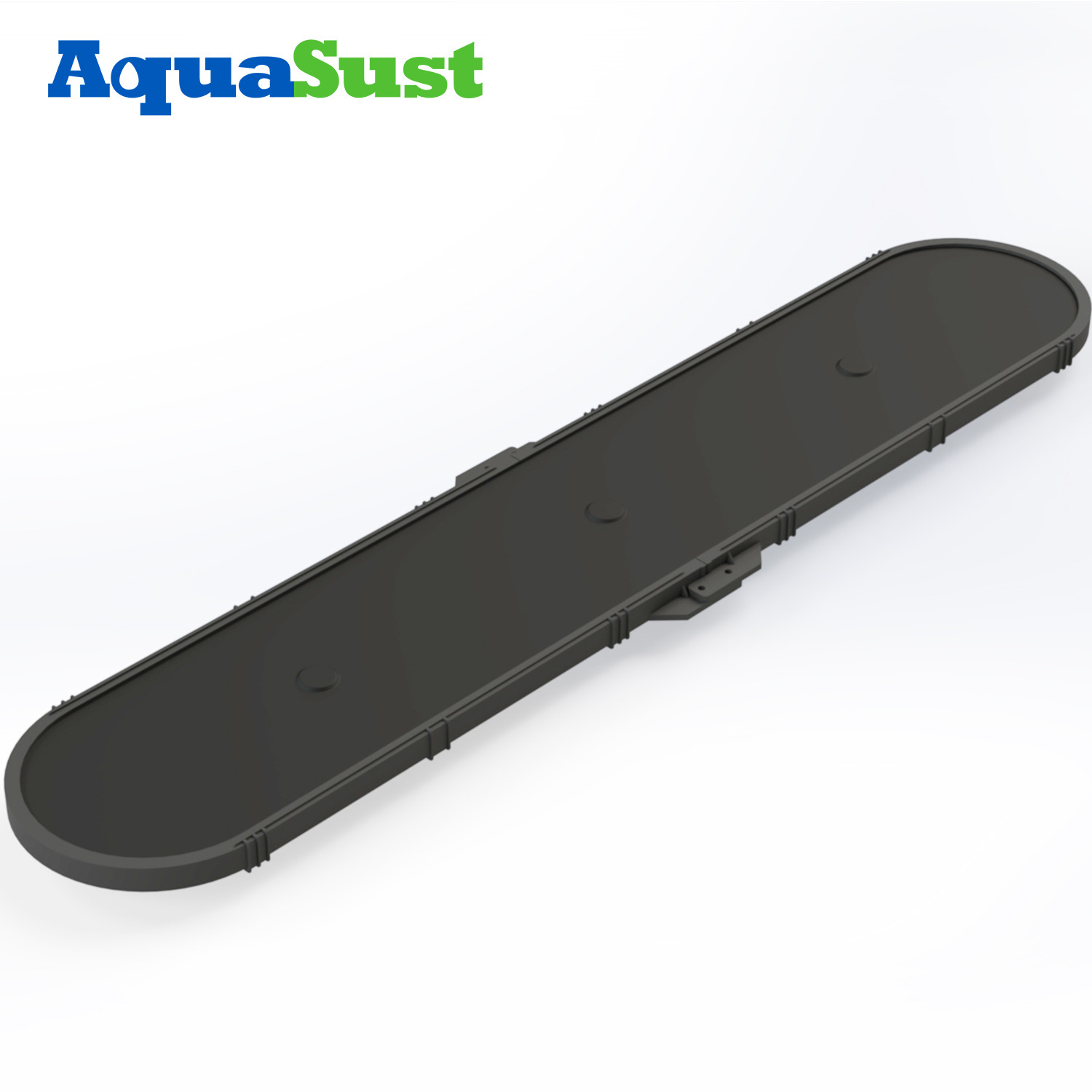
AS-PD series visual reference; confirm AS-PD650-Pro body configuration before order
Fibre-Reinforced Model

AS-PD650-Pro

EPDM membrane · PP + Glass Fiber base plate & frame

  • 650 mm platform: 680 × 220 mm
  • Fibre-reinforced PP body construction
  • Design airflow 6 m³/h, operating range 1–16 m³/h
  • Nominal bubble diameter 0.8–1.9 mm
  • Design coverage area per diffuser 0.5–2.5 m² (reference)

Best for: projects that specify a PP + glass fiber base plate and frame on the 650 mm platform.

Same-size series figures; final configuration subject to project confirmation.

AS-PD1100-Pro large-format plate aeration diffuser during aeration, from the AS-PD series product manual; 1180 x 270 mm with 0.2 m2 effective membrane area
Special Large-Format Model

AS-PD1100-Pro

EPDM or TPU membrane · PP + Glass Fiber base plate & frame · EPDM gaskets

  • Overall dimensions 1180 × 270 mm
  • Effective membrane area 0.2 m²
  • Design airflow 10 m³/h, operating range 1–20 m³/h
  • Nominal bubble diameter 0.8–2.0 mm
  • Design coverage area per diffuser 1.0–5.0 m² (reference)

Best for: energy-saving renovation of large-scale sewage treatment plants, and retrofit onto existing stainless steel or plastic pipes, round or rectangular, of different diameters.

Technical data

AS-PD Series Plate Diffuser Specifications

AS-PD650 and AS-PD1100-Pro figures are quoted from the AquaSust AS-PD series plate diffuser product manual. The AS-PD650-Pro model designation and its PP + glass fiber base plate and frame construction are supplied per the project requirement; its remaining values are the AS-PD650 series reference figures for the same 650 mm platform. Unit: mm unless stated otherwise.

Scroll the table horizontally to compare all three models.

Plate aeration diffuser model comparison — AS-PD650 / AS-PD650-Pro / AS-PD1100-Pro
Parameter AS-PD650 AS-PD650-Pro AS-PD1100-Pro
Platform 650 mm plate 650 mm plate Large-format plate
Aeration mode Fine pore / fine bubble Fine pore / fine bubble Fine pore / fine bubble
Overall dimensions (L × W) 680 × 220 mm 680 × 220 mm 1180 × 270 mm
Membrane material EPDM EPDM EPDM / TPU
Membrane thickness 1.8–2.0 mm 1.8–2.0 mm 1.9–2.1 mm
Nominal bubble diameter 0.8–1.9 mm 0.8–1.9 mm 0.8–2.0 mm
Standard design airflow 6 m³/h 6 m³/h 10 m³/h
Operating airflow range 1–16 m³/h 1–16 m³/h 1–20 m³/h
Pressure loss (head loss) 2.0–4.3 kPa 2.0–4.3 kPa 2.0–4.5 kPa
Design coverage area per diffuser (reference) 0.5–2.5 m² 0.5–2.5 m² 1.0–5.0 m²
Base plate material ABS PP + Glass Fiber PP + Glass Fiber
Frame material ABS PP + Glass Fiber PP + Glass Fiber


Engineering principle

Working Principle: A Flat Membrane Surface at One Hydraulic Level

The two diffuser families differ in how the membrane surface is arranged. In a tube diffuser the effective surface follows an arc, so the membrane sits at different elevations along the tube and the released air is not distributed from a single level. In a plate diffuser the membrane is flat, so the entire effective surface lies at one hydraulic level inside the tank.

What that flat arrangement changes is the airflow distribution across the diffuser area. The AS-PD plate geometry is designed so the membrane releases air across its whole area rather than concentrating release in one part of the diffuser, which produces the even “lotus effect” bubble pattern the plate platform is specified for.

Across the published operating airflow range the unit is designed to run in both continuous and intermittent aeration modes, so one model can be applied to different biological process configurations. Oxygen transfer and mixing performance in a given tank are established through aeration system design — tank geometry, submergence, airflow and oxygen demand — and not by the diffuser selection alone.

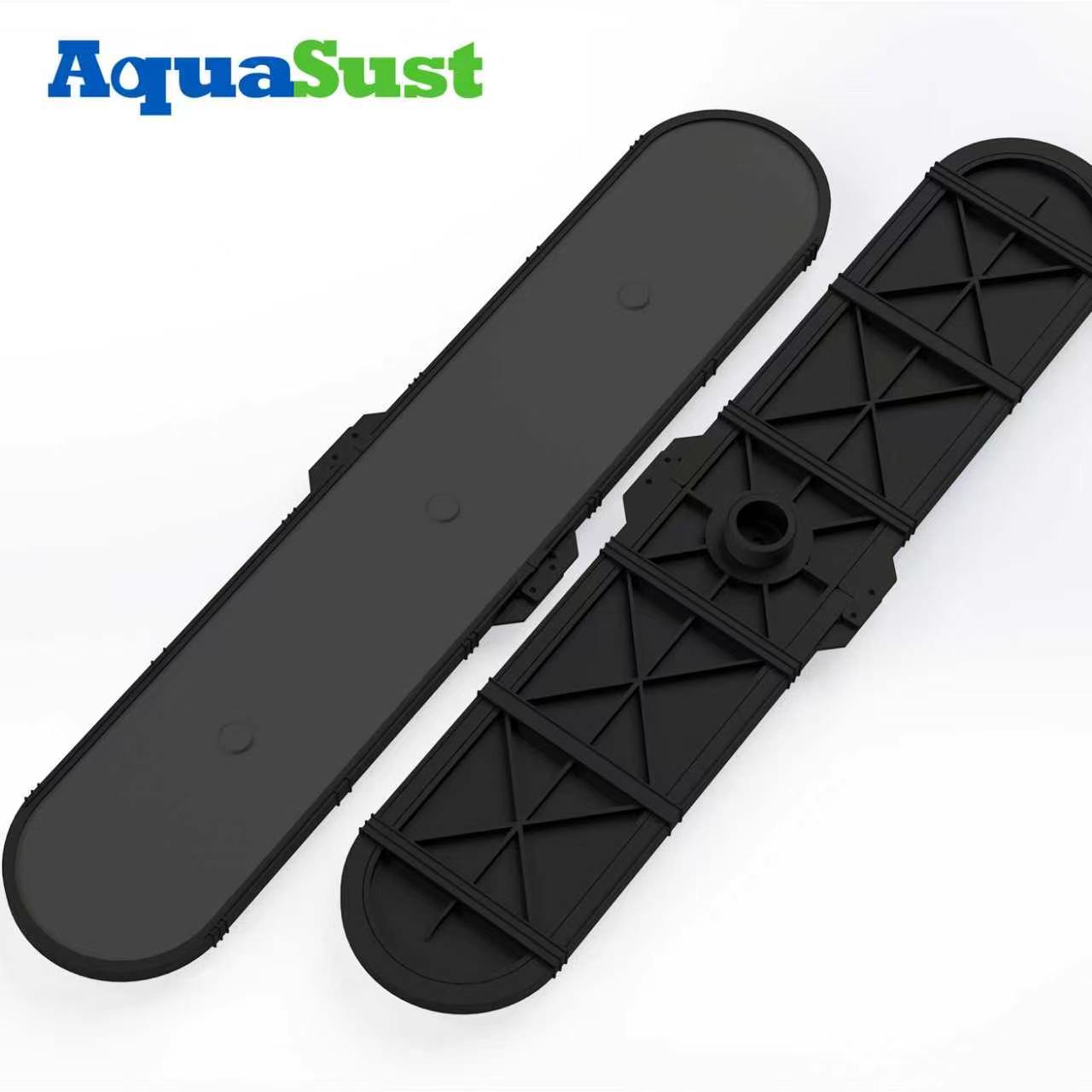
AS-PD650 plate diffuser structure: flat fine bubble membrane mounted on the ribbed base plate and held by the frame

Flat membrane layout: every point of the diffuser’s effective surface sits at the same hydraulic level.

Design features of the AS-PD series

  1. The diffuser body and its connection are designed for reliable gas transmission, with pressure loss held inside the published range for each model.
  2. During blower operation the diffuser releases bubbles across the membrane area, giving the even lotus-effect bubble pattern the plate platform is specified for.
  3. The same unit suits intermittent-operation systems and continuous aeration systems, giving flexibility across different biological process configurations.
  4. Sealing, installation and maintenance are addressed by the mounting design — a clamp saddle with EPDM gasket and securing pin on AS-PD1100-Pro — and are supported by our engineering team during commissioning.

What we do not claim

Energy savings depend on tank geometry, submergence depth, blower selection, control strategy and loading. We publish measured performance for a specific project only after it is verified for that project — we do not state generic percentage savings or a fixed service life.

Where it is used

Applications

The AS-PD series is specified for high-standard municipal and industrial wastewater treatment duty, including power plant wastewater and seawater desulfurization, and for retrofit work on existing aeration tanks.

  • Municipal wastewater treatment plants (WWTP)
  • Sewage treatment plants (STP)
  • Industrial wastewater treatment
  • Power plant wastewater treatment
  • Seawater desulfurization
  • Aquaculture wastewater treatment
  • Aeration tank renovation & retrofit
  • CAS / MBBR / MBR / SBR aeration zones

Retrofit compatibility

The AS-PD1100-Pro is designed for retrofitting onto existing stainless steel and plastic pipes — round or rectangular, of different diameters — using a factory-welded clamp saddle. That makes it practical for capacity upgrades and energy-saving renovation where the existing air distribution pipework is retained.

Aeration system design support

AquaSust provides aeration system design as a service, so diffuser selection is not delivered in isolation. Layout arrangement, air distribution and pipework, and blower matching can be reviewed together with the diffuser count and coverage area figures in the table above.

Installation & handling

Installation Points to Check Before You Start the Blower

Storage and preparation

  • Storage: keep the diffusers in their original packaging in a dry and ventilated room.
  • Clean pipework first: before installation, confirm that the pipelines are clean. All drilling chips, dirt and debris must be removed — otherwise they will be carried into the diffuser when the blower starts.
  • Gasket condition: the EPDM gasket between the diffuser and the air distribution pipe must be clean and undamaged.

Installation on round pipe (AS-PD1100-Pro)

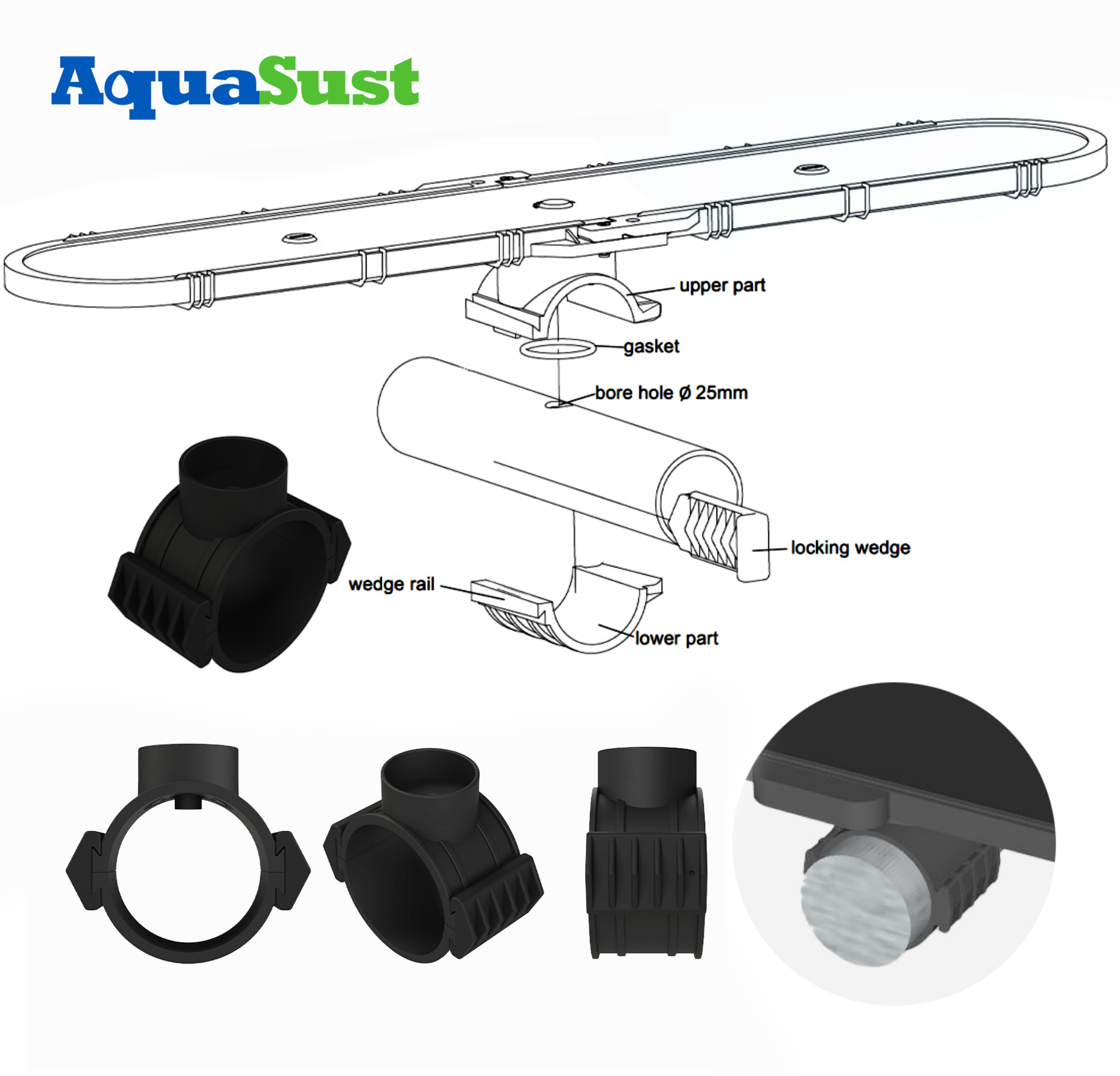
Plate aeration diffuser installation on a round pipe, exploded view from the AS-PD series product manual: clamp saddle upper part, EPDM gasket, 25 mm bore hole, wedge rail, locking wedge and safety pin

Exploded view: clamp saddle, gasket, wedge rail, locking wedge and safety pin.

Step by step

  1. The diffuser is fixed to round pipes using a clamp saddle that is welded in the factory.
  2. Bore holes of Ø25 mm are drilled in a central position on top of the round pipe.
  3. The supply air pipe connection (Ø19 mm) on the upper part of the clamp saddle acts as an installation aid and is inserted into the hole of the round pipe from above.
  4. Fit the EPDM gasket between the upper part of the clamp saddle and the distribution pipe, and keep it clean and undamaged.
  5. Push the locking wedge lightly by hand onto the narrow end of the wedge rail, then press it in with a rubber mallet until it stops. The integrated installation aid and the non-twist angle of the clamp saddle keep alignment during tightening. The saddle is closed by the joint lock and wedge, with a safety pin as standard — or with one hexagonal head screw.
  6. Insert the safety pin into the opening at the end of the wedge until it clicks into place. This prevents the connection from opening under vibration and secures a firm installation.
  7. Always make sure the diffuser is firmly and horizontally assembled before commissioning the blower.

FAQ

Plate Aeration Diffuser: Frequently Asked Questions

What is the difference between a plate diffuser and a tube diffuser?

The two types differ in how the membrane surface is arranged. A tube diffuser follows an arc, so the membrane sits at different elevations along the unit and the released air is not distributed from a single level. A plate diffuser carries a flat membrane, so its entire effective surface lies at one hydraulic level — which is what allows the AS-PD plate geometry to release air across the whole membrane area and produce the even lotus-effect bubble pattern. Oxygen transfer performance in a given tank is established by aeration system design, not by the diffuser type alone.

Which model should I choose — AS-PD650, AS-PD650-Pro or AS-PD1100-Pro?

AS-PD650 is the standard model with an ABS base plate and frame, intended for conventional aeration tanks and small-to-medium scale renovation projects. AS-PD650-Pro carries the project-specified PP + glass fiber base plate and frame on the same 650 mm platform; its remaining values are AS-PD650 series reference figures, with the final configuration subject to project confirmation. AS-PD1100-Pro is the special large-format model with a 0.2 m² effective membrane area and a 1.0–5.0 m² design coverage area per diffuser (reference value) — the preferred choice for energy-saving renovation of large-scale sewage treatment plants.

What membrane materials are available?

The AS-PD650 and AS-PD650-Pro are supplied with an EPDM membrane, 1.8–2.0 mm thick. The AS-PD1100-Pro is available with either an EPDM or a TPU membrane, 1.9–2.1 mm thick, and uses EPDM sealing gaskets between the diffuser and the air distribution pipe.

What airflow does each model handle?

The AS-PD650 and AS-PD650-Pro have a standard design airflow of 6 m³/h with an operating airflow range of 1–16 m³/h. The AS-PD1100-Pro has a standard design airflow of 10 m³/h with an operating airflow range of 1–20 m³/h. Pressure loss is published as a range only: 2.0–4.3 kPa on the 650 platform and 2.0–4.5 kPa on the AS-PD1100-Pro. The manual does not state the test conditions behind those figures, so they are not a guaranteed value for a specific duty point.

How is the diffuser installed on the air distribution pipe?

A clamp saddle is welded to the diffuser in the factory. Drill an Ø25 mm bore hole in a central position on top of the round pipe, insert the Ø19 mm supply air connection from above, fit the EPDM gasket between the saddle and the pipe, then close the saddle with the locking wedge and secure it with the safety pin (standard) or one hexagonal head screw. The diffuser must end up firmly and horizontally assembled.

What must be checked before commissioning?

Store diffusers in their packaging in a dry, ventilated room. Before installing, confirm the pipelines are clean and remove all drilling chips and dirt — if debris is left in the pipework it will be carried into the diffuser once the blower starts. The gasket between the diffuser and the pipe must be clean and undamaged, and the safety pin must be fully clicked into place.

How much area does one plate diffuser cover?

The published design coverage area per diffuser — 0.5–2.5 m² on the 650 platform and 1.0–5.0 m² on AS-PD1100-Pro — is a reference range, not a fixed figure. The area a single diffuser can serve depends on the geometry of the tank, the water depth, the airflow supplied to it and the oxygen demand of the process being treated. Those four inputs are what aeration system design uses to fix the diffuser count and layout, so treat the table values as a starting point for sizing rather than a specification to be applied directly.

Can the diffuser be retrofitted onto existing pipework?

Yes. The AS-PD1100-Pro is suitable for retrofitting onto existing stainless steel and plastic pipes — round pipe or rectangular, of different diameters — using the factory-welded clamp saddle. For high-standard duty the series is also specified for power plant wastewater and seawater desulfurization applications, and AquaSust documents projects in severe cold-climate zones within the AS-PD product manual.

Request a Plate Aeration Diffuser Quotation

Send us your tank dimensions, water depth, target airflow and treatment process. We will recommend the right model, quantity and layout — and confirm the final configuration for your project before ordering.

Hangzhou Aquasust Water Technology Co., Ltd · Aeration System & MBBR Media Manufacturer

3 results
ViewShowcase

Start Your Wastewater Treatment Solution Now

With 20 years of wastewater treatment experience, AquaSust is the trusted expert in biochemical pool solutions. If you have any questions about wastewater treatment, please contact us and we will provide you with the best solution.

Industry Recognition

Trusted Certification

Choose AquaSust Professional Wastewater Treatment Experts
Contact Person
Kate Nana
Full Name:
Kate Nana
Tel:

+86 15267462807

Email:
water@aquasust.com
WhatsApp:
15267462807
Please send your message to us
*Email
Name
*Title
*Content
Upload
  • Only supports .rar/.zip/.jpg/.png/.gif/.doc/.xls/.pdf, maximum 20MB.
Address