Aeration System Energy Optimization for a 100,000 m³/d Municipal Wastewater Treatment Plant
By: Kate Nana
Post Date: June 23rd, 2026
Email:Kate@aquasust.com
Post Tags: Deteriorating equipment performance,Activated sludge treatment,End-to-end aeration system retrofit
Project Overview
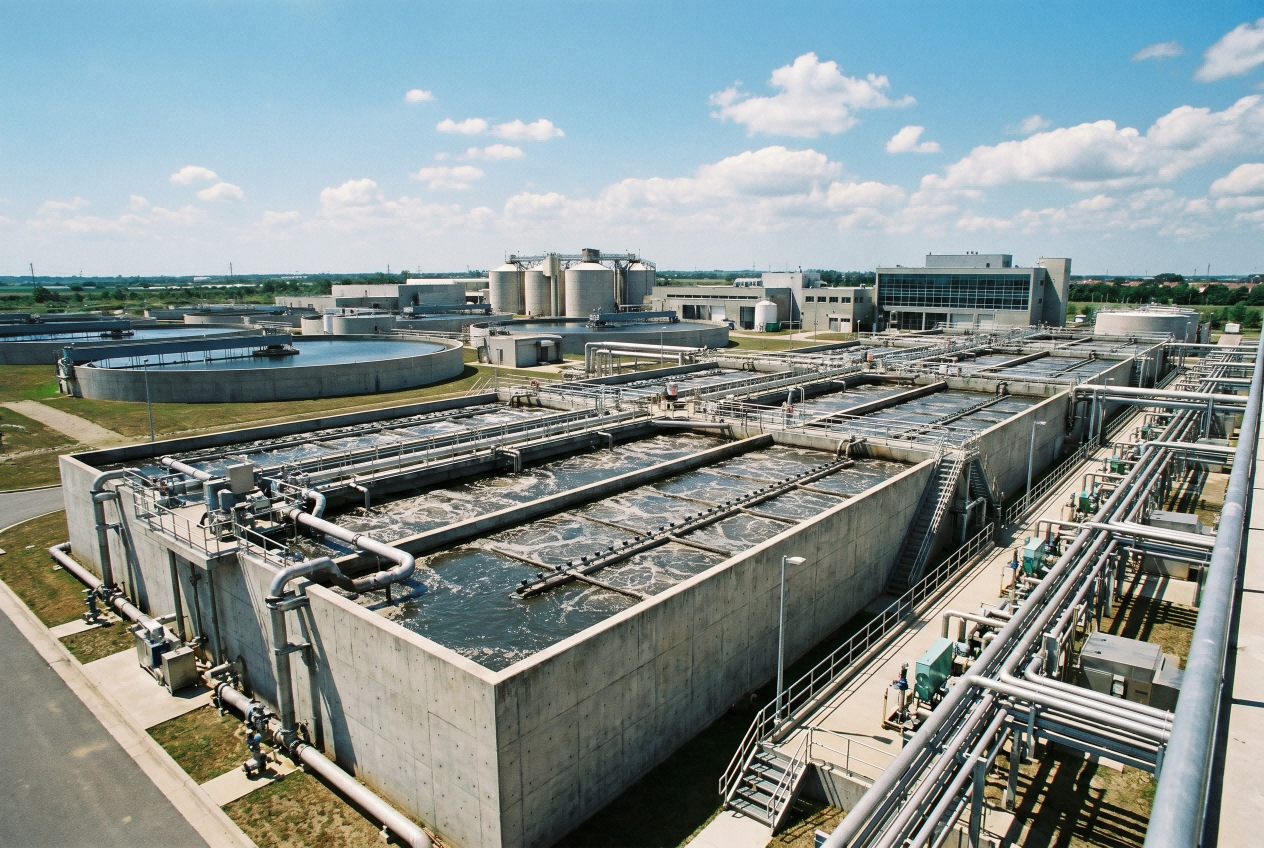
A large-scale municipal wastewater treatment facility in East Asia — operating at a design capacity of
100,000 m³/d across multiple biological treatment trains — faced a critical energy efficiency bottleneck in its aeration system.
Aeration accounted for more than 55% of the plant's total operational energy expenditure (OPEX), and deteriorating equipment performance was driving energy costs upward quarter over quarter.
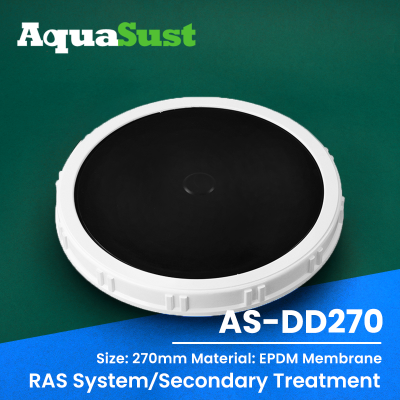
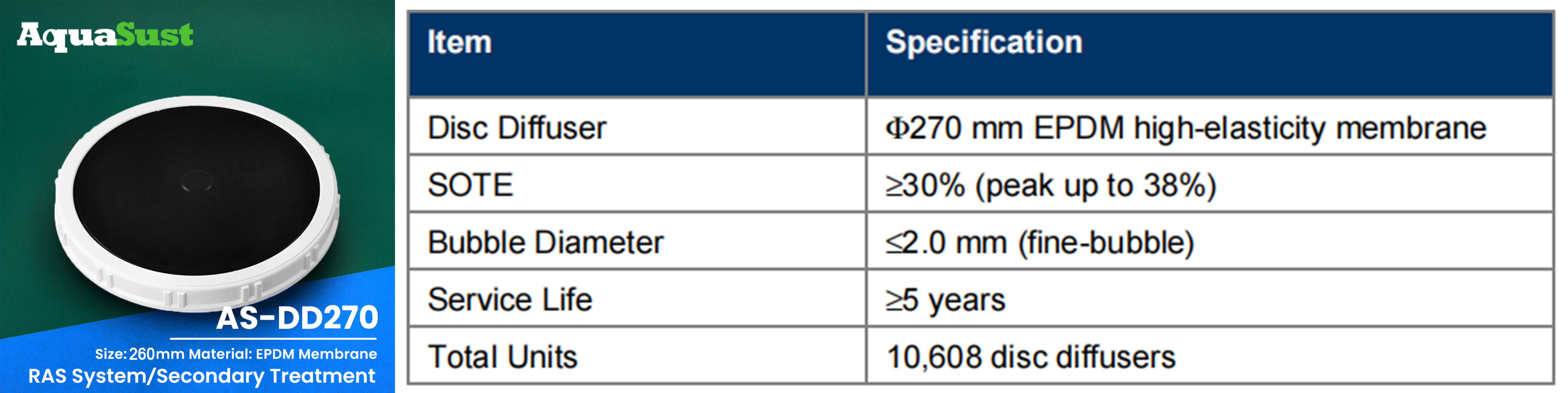
Hangzhou Aquasust Water Technology Co., Ltd. was engaged to conduct a full engineering assessment and deliver an end-to-end aeration system retrofit, covering equipment supply, process redesign, and performance verification across all activated sludge treatment stages. The core equipment supplied — the Φ270 EPDM membrane disc diffuser — is Aquasust's flagship fine bubble
diffuser, engineered for high SOTE and long service life in municipal WWTP aeration applications.
The Challenge
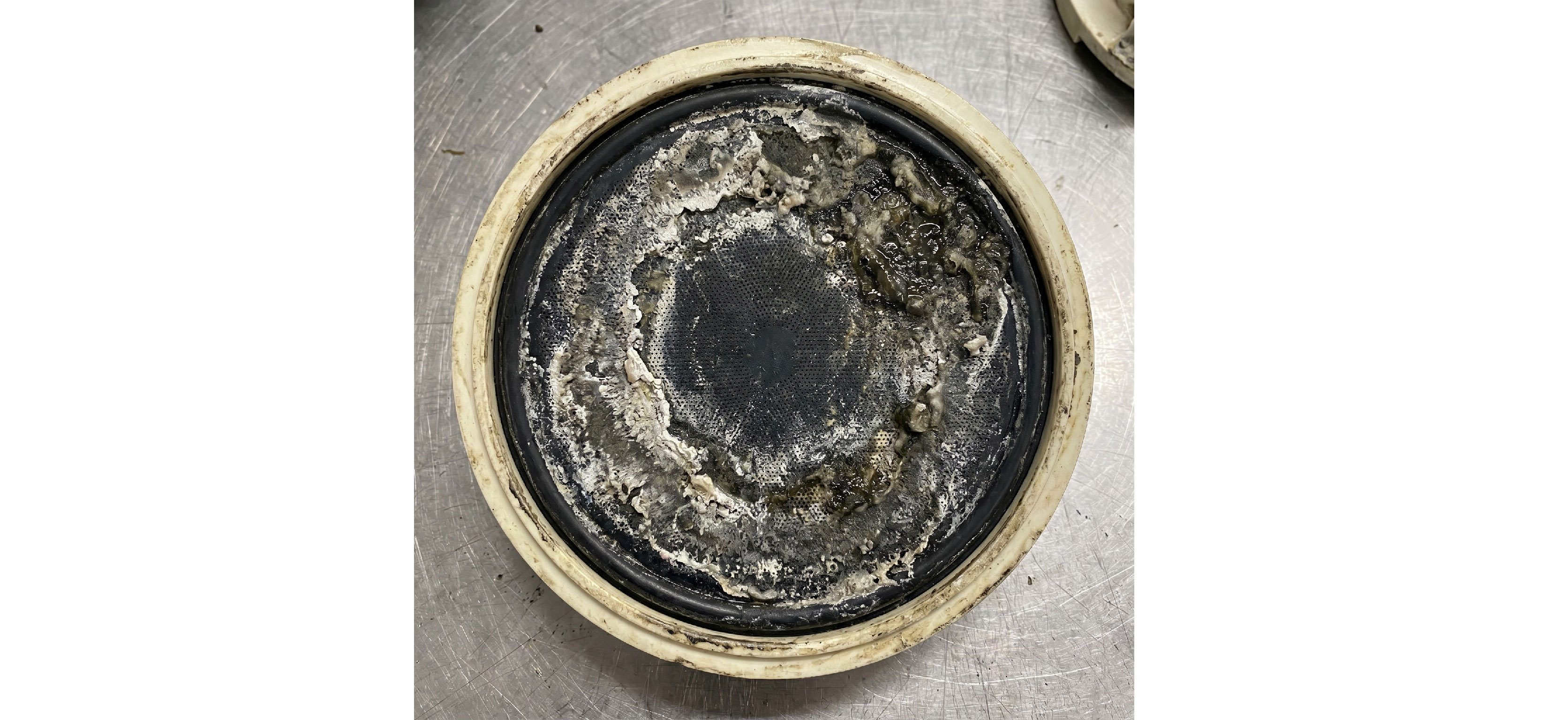
The facility's legacy aeration infrastructure had reached the end of its effective service life. Three converging failure modes were identified:
1. Severe Diffuser Fouling & Scaling: Calcium carbonate and biological scaling had progressively occluded diffuser membrane apertures. This significantly increased head loss and airflow resistance.
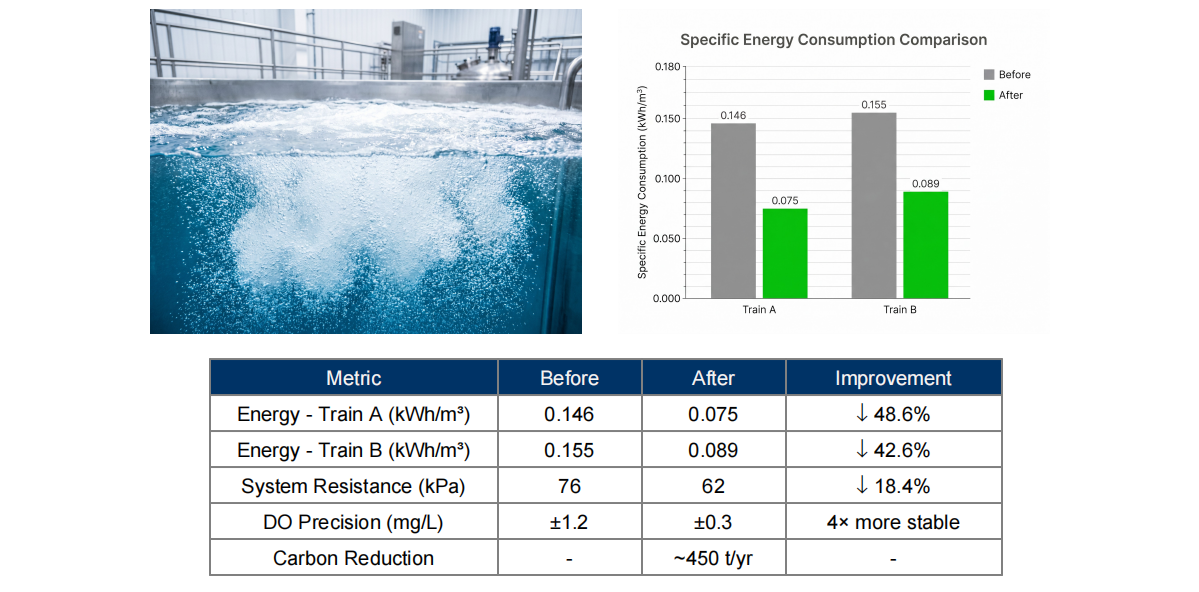
2. Non-Uniform Airflow Distribution: Fouling-induced partial blockages caused highly uneven airflow across the diffuser grid, resulting in dissolved oxygen (DO) swings of ±1.2 mg/L.
3. Membrane Fatigue: Ageing EPDM membranes exhibited mechanical fatigue, increasing maintenance frequency.
Root Cause Analysis
Aquasust engineers conducted a systematic Root Cause Analysis (RCA) including blower discharge pressure profiling, SCADA-validated DO trend analysis, and SOTE modelling. Diagnostic finding: System total resistance had risen to 76 kPa, far above design specification — the primary driver of excess blower energy
Our Engineering Approach
Process Design Innovations:
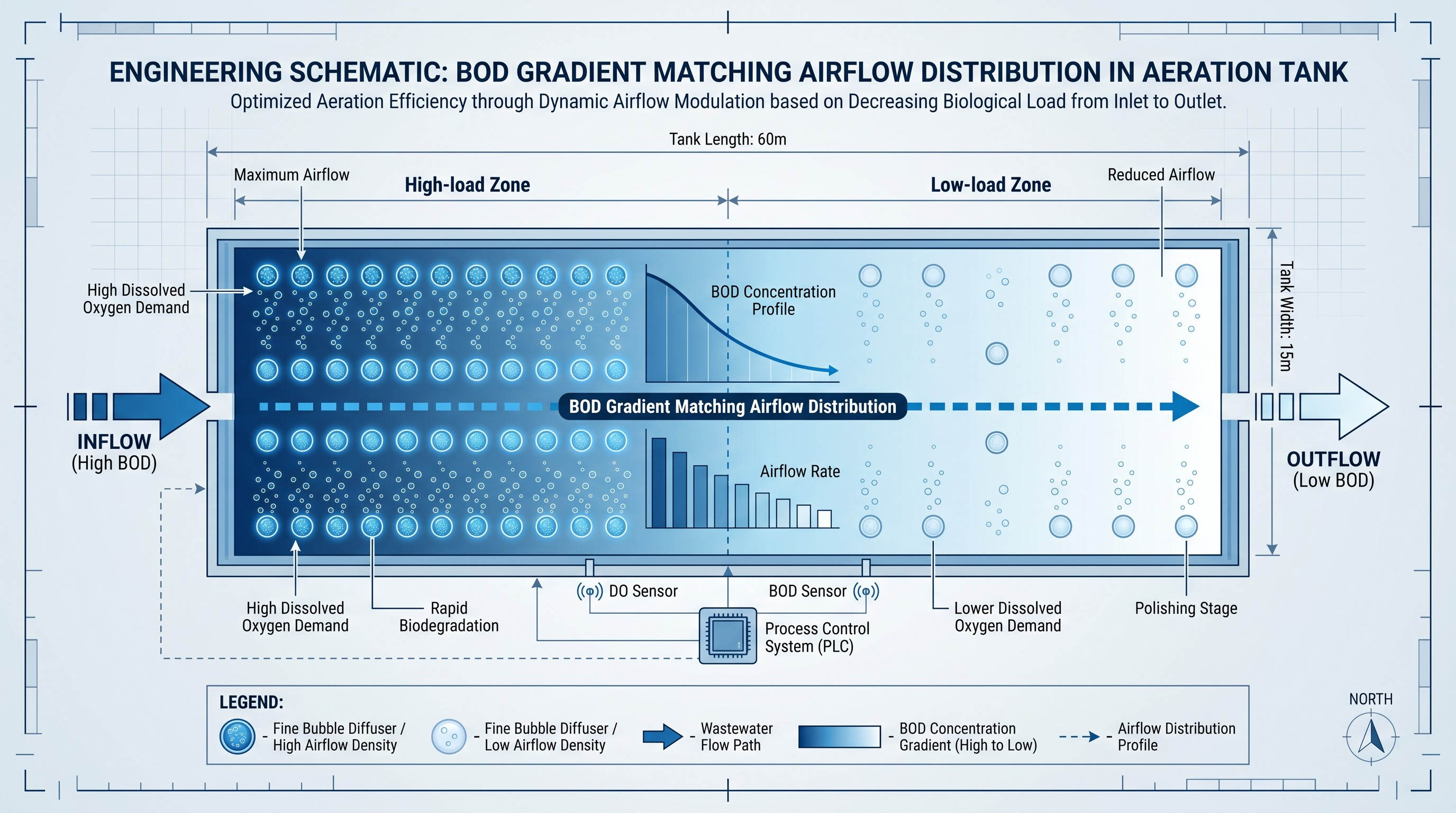
BOD-gradient-matched airflow reconstruction: The layout was redesigned to match oxygen supply density to actual substrate demand gradients. The inlet (high-BOD) zone received higher diffuser density.
Oxygen transfer simulation: Diffuser positioning was optimised using SOTE modelling. In-situ acid cleaning: An online acid wash system was incorporated to maintain SOTE dynamically.
Solution & Scope of Supply
Verified Results
Payback Period: ≤ 1.5 years
Lifecycle Value
This project demonstrates a repeatable engineering framework for aeration system energy optimisation. Benefits include 43–49% energy reduction, enhanced process stability (±0.3 mg/L DO), asset lifecycle extension via acid cleaning, and significant carbon footprint reduction (~450 tonnes CO■/yr).
Ready to Optimise Your Aeration System?
Contact Aquasust: aquasust.com | Kate@aquasust.com