Retrievable Aeration System: Advantages, Applications & Why It's Replacing Fixed Diffusers in Industrial Wastewater Treatment
Retrievable Aeration System: Advantages, Applications & Why It's Replacing Fixed Diffusers in Industrial Wastewater Treatment
By: Kate Nana
Post Date: July 13th, 2026
Email:Kate@aquasust.com
Post Tags: Wastewater Treatment,Retrievable Aeration System,Fine Bubble Tube Diffuser
The Hidden Cost of Fixed Aeration Systems
Traditional fixed-bottom microporous aeration systems have been the industry standard for decades — but they carry a significant operational liability: every maintenance cycle requires a complete tank drain.
For industrial plants running continuous production, a single maintenance event means: 3 to 7 days of full plant shutdown
●Complete biological sludge removal from tanks holding thousands of cubic meters
●Risk of effluent discharge violations during the restart period
●Massive downtime losses that can exceed seven figures per incident
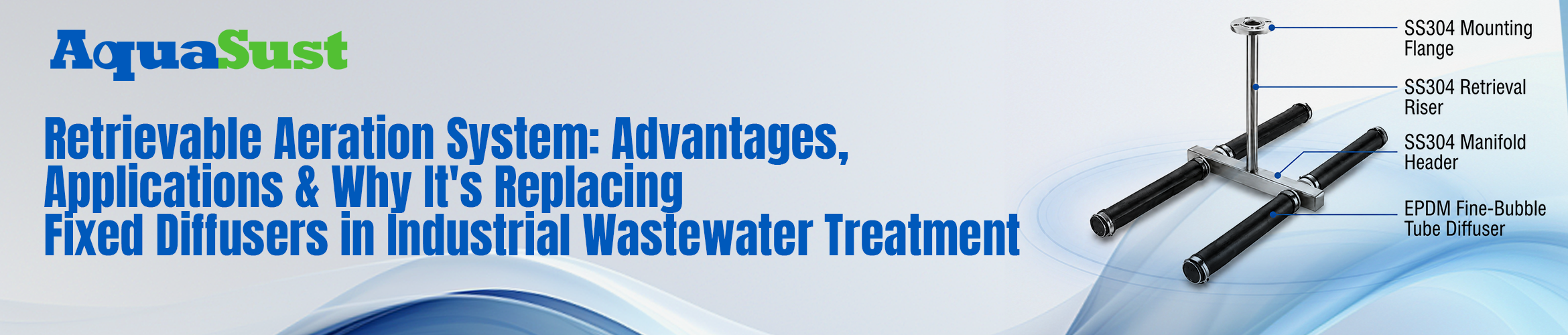
The retrievable aeration system (also called a liftable or hoistable aeration system) was developed specifically to eliminate this problem. By mounting fine bubble tube diffusers on modular stainless steel frames that can be individually lifted to the tank surface without draining, it transforms aeration maintenance from a week-long shutdown event into a 2-hour single-operator task.
This article covers the full system architecture, competitive advantages, application scenarios, a verified case study, and selection guidance for engineers and plant operators evaluating diffuser aeration system upgrades.
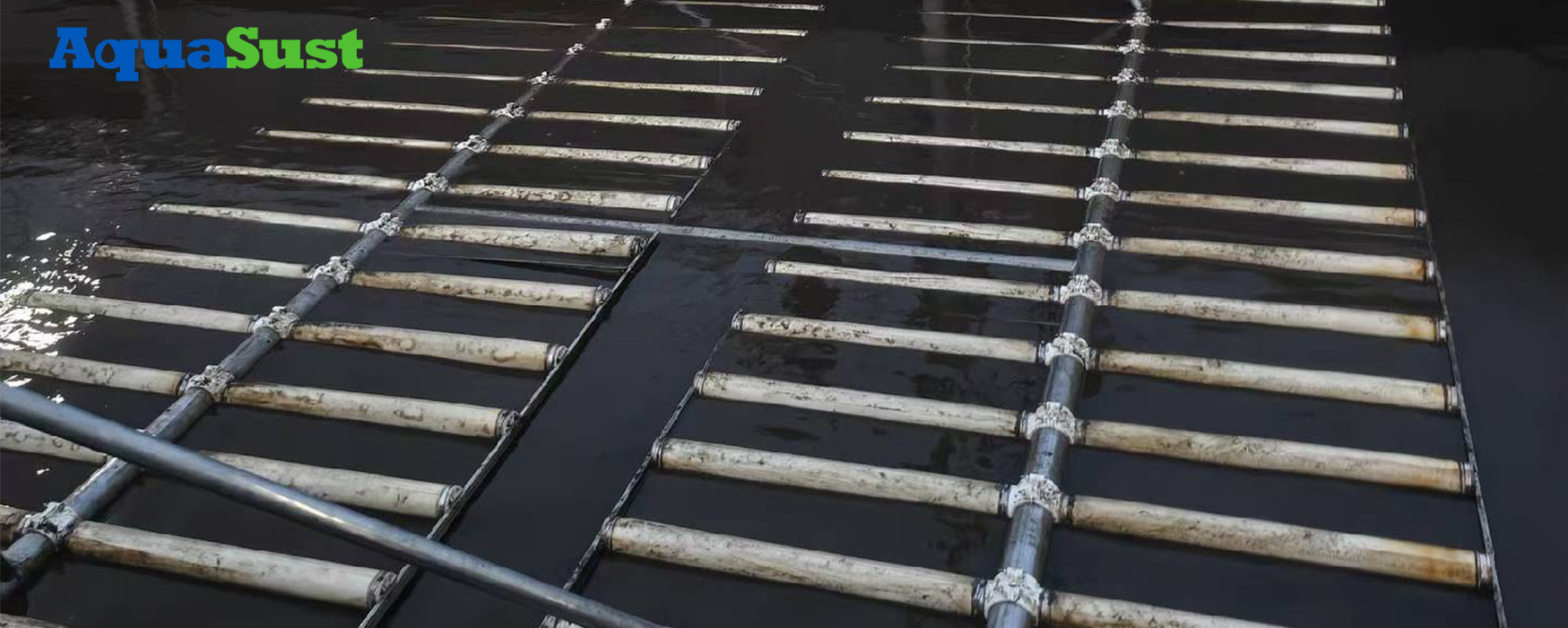
Figure 1: AquaSust 316L stainless steel aeration diffuser frame — the structural backbone of a retrievable aeration system. Pre-embedded lifting lugs allow individual modules to be hoisted to the surface without tank drainage.
1. System Architecture: Four Core Modules
A retrievable aeration system differs fundamentally from traditional fixed-bottom configurations. It consists of four integrated modules:
Module 1 — Liftable Aeration Unit
The core structural element: a modular assembly of fine bubble tube diffusers mounted on a 316L stainless steel support frame. Each unit includes:
●EPDM or PTFE aeration membrane tubes (rotary-cut perforation structure)
●Sealed quick-connect fittings for rapid disassembly
●Pre-welded lifting lugs for crane or hoist connection
●Independent airflow control valve per module
Module 2 — Shore-Side Air Supply Header + Flexible Lifting Hose
A fixed UPVC or 304 stainless steel air supply header runs along the tank wall. Each aeration module connects via an aging-resistant flexible hose rated for full extension during lifting — maintaining continuous air supply even while adjacent modules are being serviced.
Module 3 — Lifting Equipment
Pre-embedded lifting anchor points on the tank top beam, paired with manual or electric mini-hoists. A single operator can lift one complete aeration module. No crane, no confined-space entry, no sludge removal.
Module 4 — Intelligent Control Pipeline
Each module's airflow is independently controlled via manual regulating valves. Compatible with automated DO (dissolved oxygen) linkage control systems for variable-frequency blower integration, enabling real-time zone-by-zone oxygen adjustment.
2. Six Core Competitive Advantages
Advantage 1: Zero Tank Drainage Required — Maintenance Downtime Reduced by >90%
Fixed aeration systems require complete drainage of biological sludge before any inspection or membrane replacement. For a 2,000 m³ aeration tank, this means:
●3–7 days of shutdown per maintenance cycle
●Full sludge removal and disposal
●Biological restart period with effluent compliance risk
The retrievable system eliminates all of this. Individual modules are hoisted to the tank surface, cleaned with high-pressure water, and resubmerged — while all remaining modules continue supplying oxygen. The plant never shuts down. Total maintenance time per module: under 2 hours.
Operational impact: For 24/7 continuous-production industrial plants, this is not an incremental improvement — it is a fundamental change in how aeration maintenance is managed.
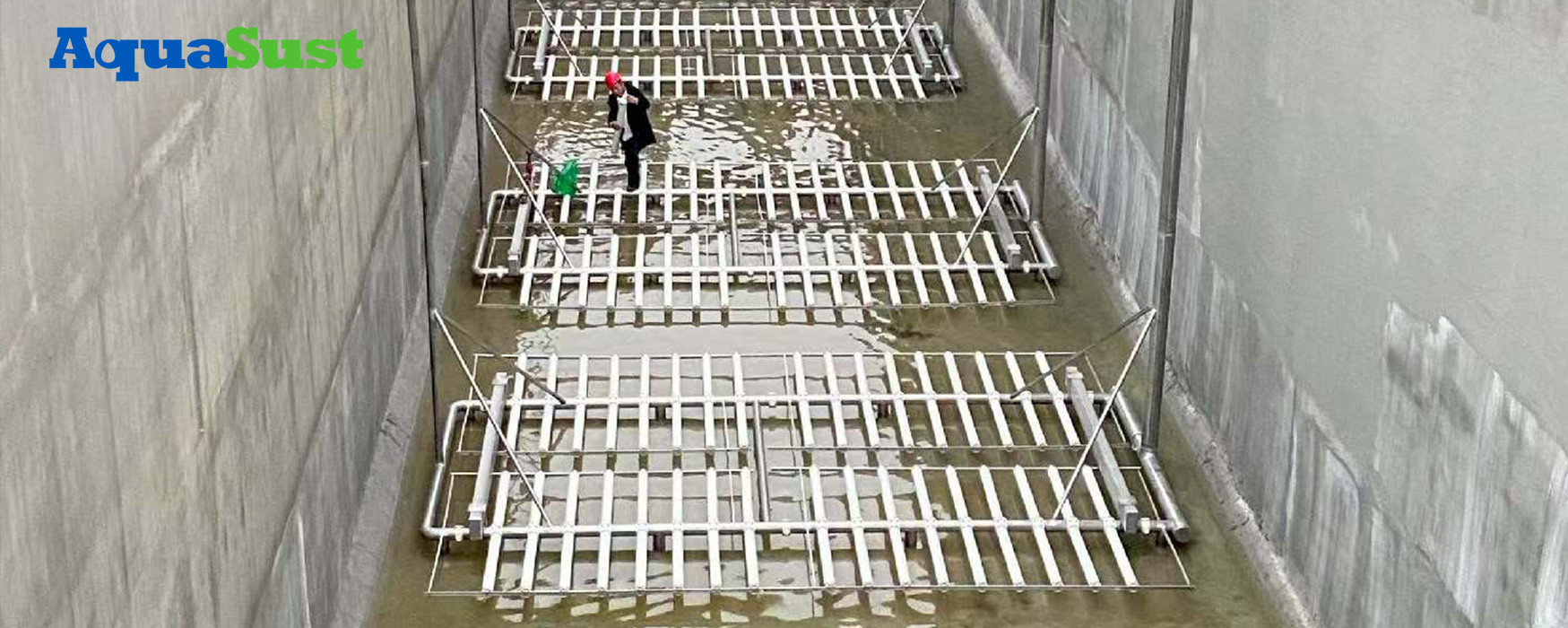
AquaSust AS-TD series fine bubble tube diffusers mounted on 316L stainless steel support frames. EPDM/PTFE membranes with rotary-cut perforations provide anti-clogging performance in high-fiber industrial wastewater.
Advantage 2: Modular Design — Safe, Single-Operator Maintenance
Standardized modular units are sized for lightweight hoisting equipment — no large crane, no sludge pump, no confined-space dive team. The process:
1. Connect hoist to lifting lugs on module frame
2. Raise module to tank surface
3. Disconnect quick-release fittings
4. Flush membrane tubes with high-pressure water
5. Reconnect and lower — done
This eliminates underwater operations in deep tanks and removes personnel exposure to toxic or oxygen-deficient environments at tank bottoms — a significant safety benefit in chemical and pharmaceutical wastewater applications.
Advantage 3: Anti-Clogging + Anti-Entanglement Design for High-Fiber Wastewater
Advantage 3: Anti-Clogging + Anti-Entanglement Design for High-Fiber Wastewater
The aeration membrane uses a rotary-cut perforation structure combined with smooth EPDM or PTFE material. This design:
●Generates self-cleaning airflow pulses that dislodge adhering fibers
●Prevents the "wrap-and-seal" clogging failure mode that destroys conventional disc diffusers in textile and paper wastewater
●Extends the clogging cycle by 2–3× compared to standard disc diffuser aeration systems
●Reduces cleaning frequency and associated consumable costs
For printing/dyeing, pulp/paper, and food processing plants — where fiber, oil, and protein fouling is continuous — this is the single most impactful technical differentiator.
Advantage 4: Full Corrosion Resistance — pH 2–12 Industrial Wastewater
Material selection is comprehensive:
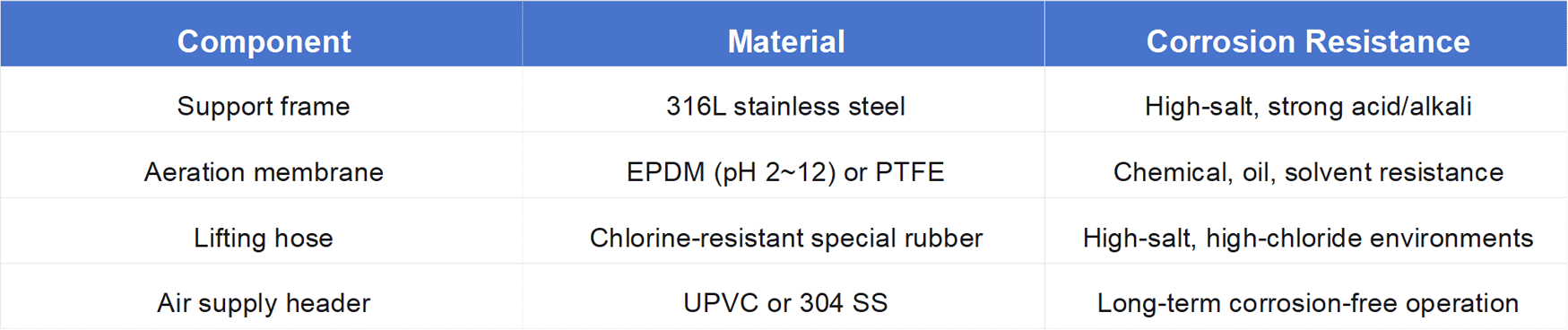
No carbon steel anti-corrosion coatings required. No rust contamination risk. Suitable for electroplating, pharmaceutical, chemical, and high-salinity industrial wastewater without special material upgrades.
Advantage 5: High Oxygen Transfer Efficiency — 28%–36% SOTE
The long-format tube diffuser layout distributes uniformly across the full tank width, eliminating the aeration dead zones that reduce overall treatment capacity in fixed disc diffuser grids. Key performance data: Standard Oxygen Transfer Efficiency (SOTE): 28%–36%
●Compatible with magnetic levitation / variable-frequency screw blowers for demand-based airflow control
●Blower energy consumption 15%–22% lower than jet aeration systems at equivalent treatment capacity
●DO automatic control enables zoned oxygen adjustment — reducing energy waste during low-load periods
Advantage 6: Retrofit-Ready — 70% Lower Civil Engineering Cost vs. Fixed Systems
Advantage 6: Retrofit-Ready — 70% Lower Civil Engineering Cost vs. Fixed Systems
Existing biological treatment tanks in aging wastewater plants typically have concrete-anchored bottom supports — making removal and reinstallation of fixed aeration grids structurally complex and expensive.
The retrievable system requires only:
●Pre-embedding of lifting anchor points on the tank top beam
●Shore-side air supply header installation
No tank bottom demolition. No existing structure modification.
Civil engineering scope and cost reduced by approximately 70% vs. full fixed-system replacement. Construction period shortened by weeks.
3. Application Scenarios
A. Industrial Wastewater — Core Target Market
Figure 3: Textile and dyeing wastewater treatment — the highest-demand application for retrievable aeration systems. Cotton and synthetic fibers rapidly clog conventional disc diffusers, causing frequent shutdowns in 24/7 production environments.
Textile, Dyeing & Chemical Fiber Wastewater
The 1 application. Cotton fibers, synthetic fibers, and sizing agents clog conventional disc diffusers within weeks. Factories operate 24 hours/day with zero tolerance for shutdown. Rotary-cut tube membrane design prevents fiber entanglement; single-module cleaning is performed without interrupting production.
Chemical, Electroplating & High-Salinity Pharmaceutical Wastewater
High chloride ion content, strong acid/alkali conditions. 316L frame + PTFE or EPDM membrane rated to pH 2–12. Fixed systems corrode and fail; the retrievable system operates continuously with zero corrosion-related replacements.
Food, Brewing & Fermentation Wastewater
Proteins and edible oils adhere to micropores, causing progressive efficiency loss. Periodic hoisting for manual degreasing cleaning — without sludge tank drainage — maintains stable BOD degradation performance.
Deep Aeration Tanks (depth ≥ 6m)
Underwater maintenance of fixed diffusers at depth requires diver entry or confined-space certification. Hoisting from the tank top eliminates all depth-related safety risk.
B. Municipal Wastewater Treatment
Aging Plant Renovation Projects
Early-generation wastewater plants used fixed concrete-bottom aeration supports. The retrievable system installs without altering tank bottom structure, accelerating upgrade timelines. Compatible with national Class A municipal discharge standard upgrade programs.
Large Municipal WWTPs (≥10,000 m³/day)
Zone-by-zone maintenance keeps all other biological zones active during service. No plant-wide outage, no risk of effluent exceedance during maintenance windows. Adapts to seasonal load variation through zoned airflow adjustment.
Rural & Township Wastewater Stations
Designed for minimal staffing. Single-operator maintenance with manual hoist — no specialized dredging contractor required. Reduces long-term O&M labor costs for remote facilities.
C. Special Tank Configurations
MBR membrane tanks
●: Modular aeration adapts to irregular tank geometry, ensuring uniform DO distribution without dead zones
Oxidation ditch systems
●: Long-narrow tank configurations benefit from even strip-format tube diffuser coverage
Intermittent production stations
●: Periodic hoisting and flushing during low-flow periods prevents sludge settling on diffuser surfaces
4. Verified Case Study: Textile Dyeing Industrial Park Upgrade
Background
A large integrated dyeing and printing industrial park ran a fixed microporous disc diffuser system. Cotton fiber fouling completely blocked diffuser micropores within 3 months of each installation. Maintenance required:
●Full drainage of a 2,000 m³ biological sludge tank
●5-day plant shutdown per event
●Losses exceeding ¥1,000,000 per shutdown incident
●Persistently high blower energy consumption
Upgrade Solution (AquaSust)
●Full replacement with liftable rotary-cut tube aerator system
●Electric hoist installed on tank top beam
●Variable-frequency magnetic levitation blower + DO automatic control
●DAF (dissolved air flotation) pre-treatment system added to remove fiber slurry before biological stage
Measured Results After Upgrade
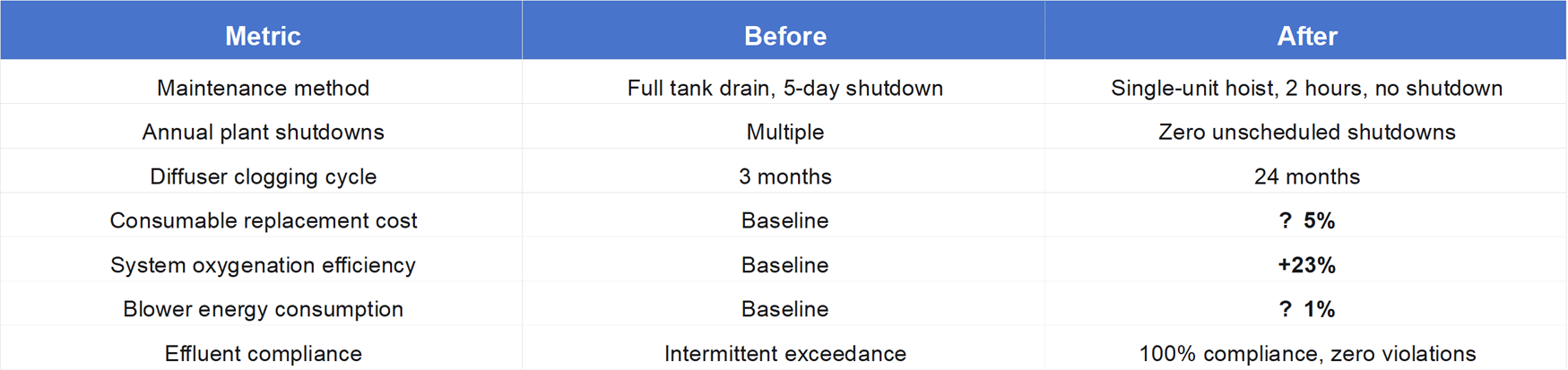
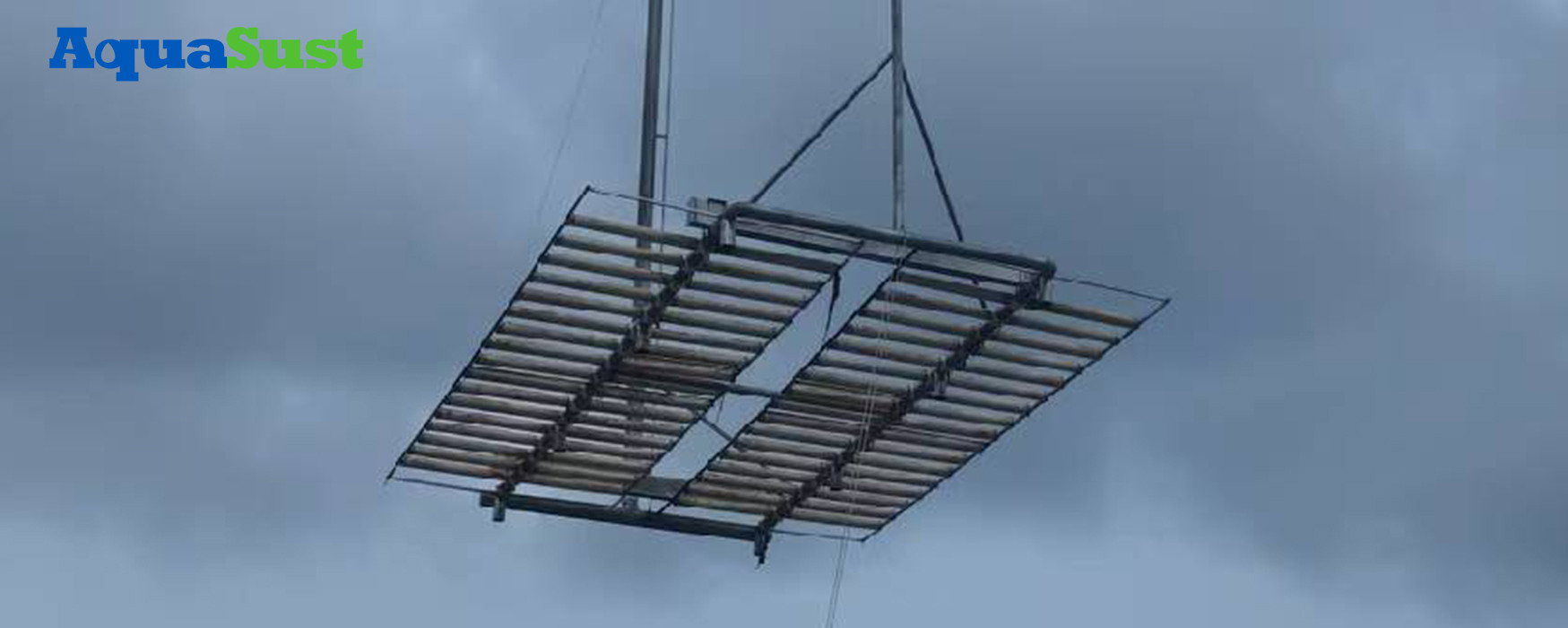
Figure 4: A retrievable aeration diffuser grid lifted to the tank surface for routine inspection. The remaining modules in the tank continue operating, maintaining biological treatment continuity throughout the maintenance procedure.
5. Selection & Specification Guide
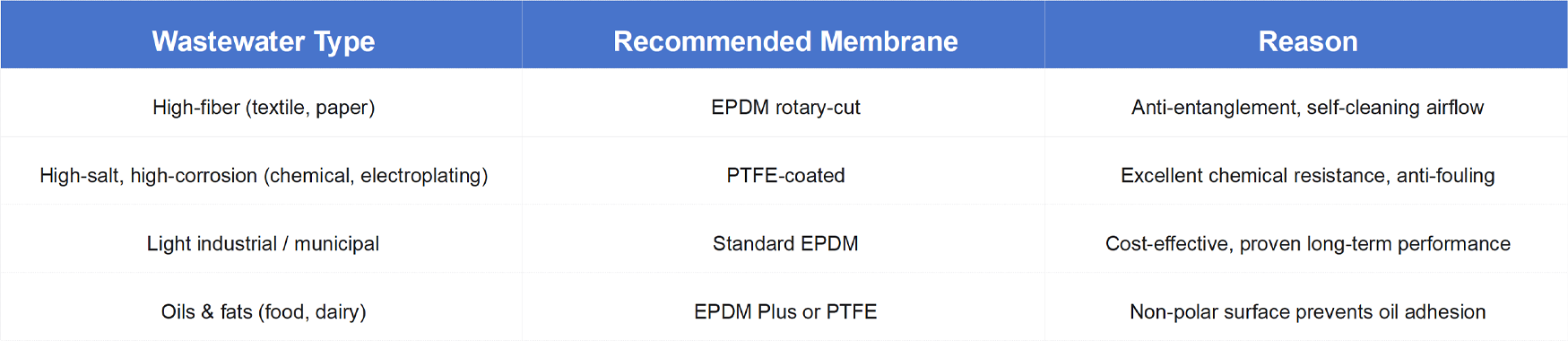
Membrane Type Selection by Water Quality
Key Installation Checklist
Lifting clearance
●: Minimum vertical clearance above tank top confirmed for full module extraction
Hoist capacity
●: Electric hoist for tanks >500 m³; manual hoist acceptable for smaller stations
Hose extension margin
●: Flexible lifting hoses sized for full lift stroke + 20% safety margin
Header material
●: UPVC or 304 SS for all onshore air supply pipework
Zone isolation
●: Independent valve per module confirmed for partial-zone maintenance capability
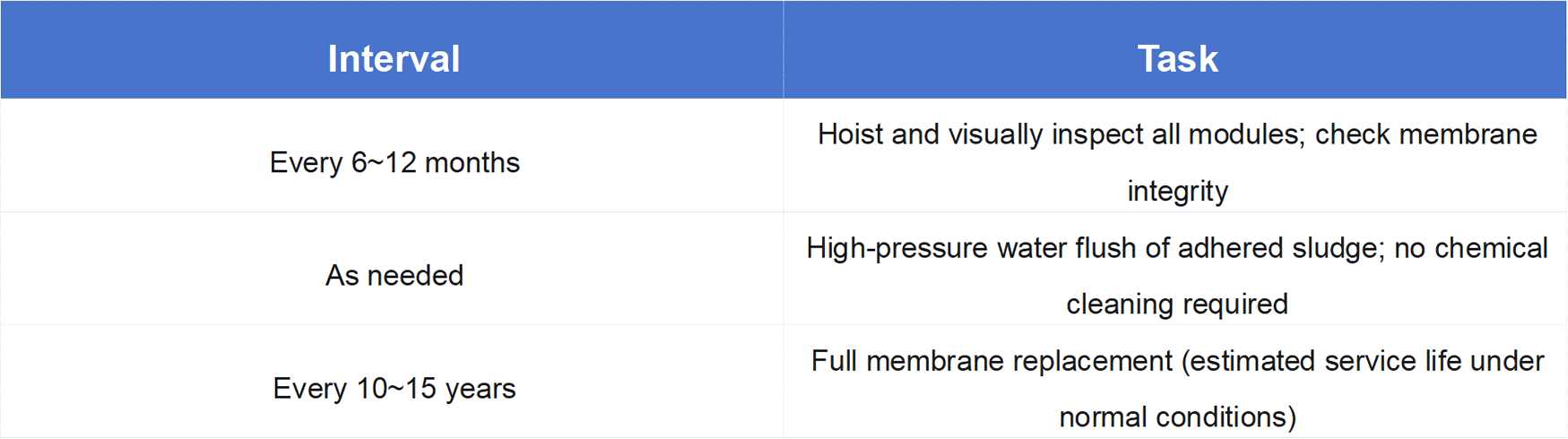
Routine Maintenance Schedule
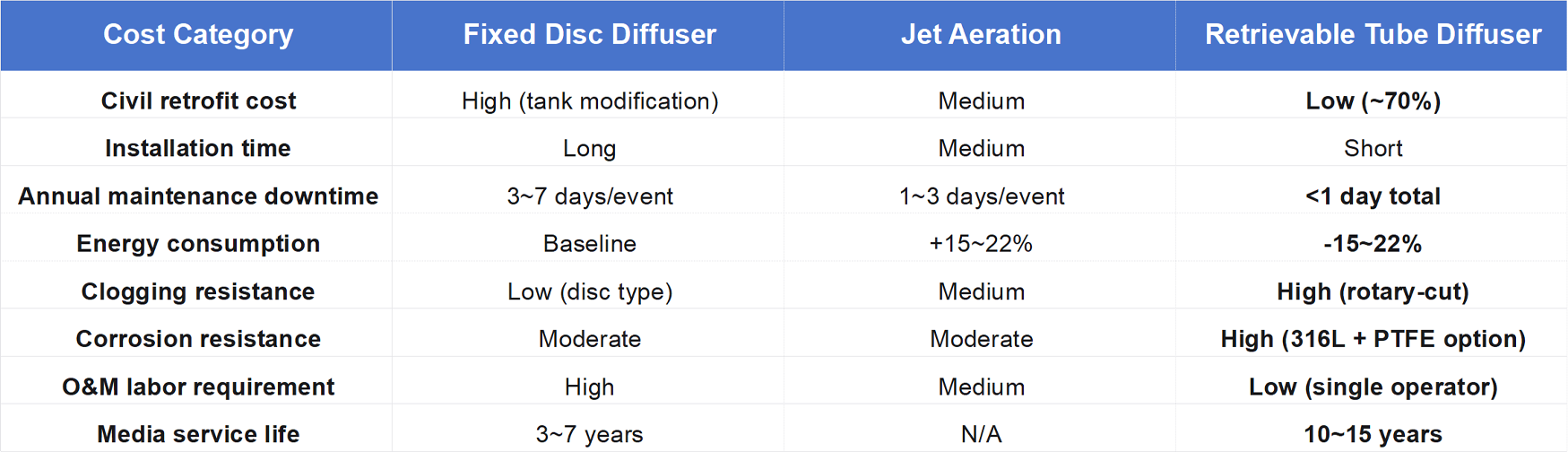
6. Total Cost of Ownership: Retrievable vs. Fixed vs. Jet Aeration
Conclusion
As environmental discharge standards tighten and industrial wastewater complexity increases, the operational and economic gap between fixed and retrievable aeration systems continues to widen.
The retrievable aeration system — with its modular hoistable design, anti-clogging rotary-cut membranes, full corrosion resistance, and 28%–36% oxygen transfer efficiency — directly addresses the two core pain points of traditional aeration: difficult maintenance and high downtime costs.
For textile, chemical, food processing, and pharmaceutical wastewater plants operating continuous production schedules, this technology is not a premium option — it is the engineering-appropriate choice. For municipal plant upgrade projects, its retrofit-ready architecture and 70% lower civil cost make it the fastest and most cost-effective path to Class A compliance.
AquaSust supplies the complete retrievable aeration system: liftable tube diffuser modules, 316L stainless steel frames, flexible lifting hoses, and full system engineering support from site survey through commissioning.
Frequently Asked Questions
Q: Can a retrievable aeration system be installed in an existing tank without modifying the tank bottom?
A: Yes. The system requires only pre-embedded lifting anchor points on the tank top beam and a shore-side air header. No tank bottom demolition or modification is required, reducing civil engineering scope by approximately 70%.
Q: What membrane material should I specify for high-chloride electroplating wastewater?
A: Specify PTFE membrane with 316L stainless steel frame. PTFE provides outstanding resistance to chloride ion corrosion and high-concentration chemical environments across pH 2–12.
Q: How long does a single maintenance cycle take?
A: For a standard module, cleaning takes under 2 hours: hoist to surface, flush with high-pressure water, resubmerge. Remaining modules maintain full biological treatment continuity throughout.
Q: What is the oxygen transfer efficiency compared to jet aeration?
A: Retrievable tube diffuser systems achieve 28%–36% SOTE (Standard Oxygen Transfer Efficiency), with blower energy consumption 15%–22% lower than jet aeration at equivalent treatment capacity when paired with variable-frequency controls.
Q: How often should diffuser membranes be replaced?
A: Under standard operating conditions with routine maintenance every 6–12 months, membrane service life reaches 10–15 years — significantly longer than conventional EPDM disc diffusers (3–7 years).
Get a Free Aeration System Design & Quote
Contact AquaSust:
Website:www.aquasust.com
Email:water@aquasust.com
WhatsApp:+86 15267462807
AquaSust — 20+ Years of Wastewater Aeration Engineering Expertise